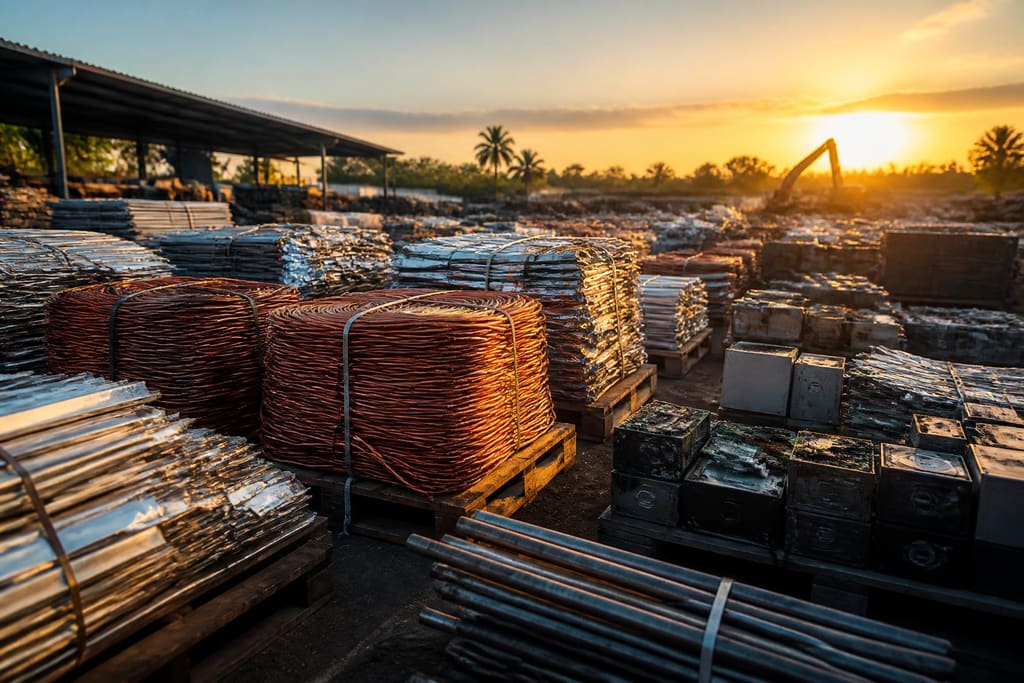
Clean, uncoated copper wire and conductor with minimal oxidation or attachments.
Material breakdown
Common Types We May Encounter.
This guide explains the major sub-types within copper, brass & aluminium. Exact acceptance and handling depend on the condition, composition, quantity and site requirements of the actual material.
Plumbing tube, electrical busbar, sheet, plate and clean copper fabrication scrap.
Copper conductor with plastic or rubber insulation; recovery depends on conductor content and cable construction.
Copper-zinc alloy found in valves, taps, fittings, locks, radiators, instruments and industrial components.
Profiles from doors, windows, frames, architectural systems and fabricated structures.
Sheet, utensils, panels, cast housings, wheels and general aluminium components.
Where it comes from
Where This Scrap Comes From.
Common Sources
- Homes, Shops And Everyday Clear-Outs
- Electrical contractors and data centers
- HVAC and plumbing operations
- Building renovation and demolition
- Manufacturing and fabrication
- Automotive and transport maintenance
What Affects Material Value
- Exact metal/alloy
- Copper or aluminium recovery percentage
- Coatings and insulation
- Iron/steel attachments
- Oil, dirt or moisture
- Segregation by metal family
How we approach it
From Identification To Recycling Route.
A clear workflow helps reduce mixing, unnecessary handling and contamination while keeping large-volume movement organized.
Identify the base metal and separate copper, brass and aluminium.
Remove or account for obvious ferrous attachments and mixed components.
Keep clean solids separate from cable, radiators and mixed assemblies.
Use mechanical handling for bulk coils, busbar, profiles and industrial scrap.
Route each non-ferrous stream to suitable recovery and refining channels.
BEFORE COLLECTION
Prepare The Material Safely.
- Do not burn insulation from cable.
- Keep copper, brass and aluminium in separate containers whenever practical.
- Drain process fluids from equipment and remove unrelated waste before collection.
Have Copper, Brass & Aluminium To Clear?
Share the material type, approximate quantity, condition and site access details so the requirement can be assessed properly.