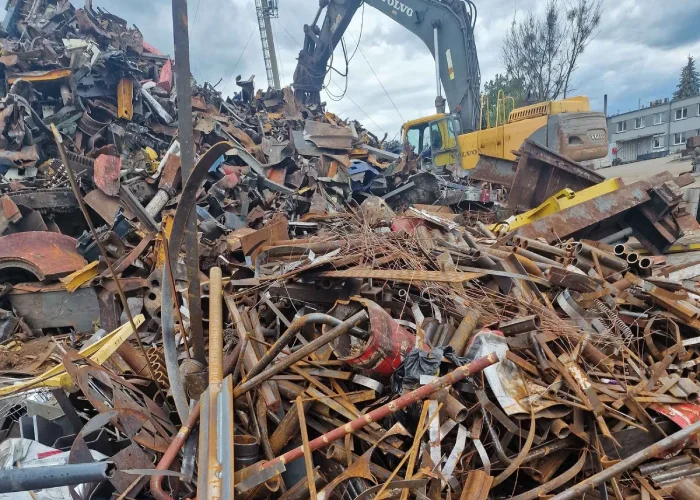
Structural sections, beams, channels, plates, heavy off-cuts and thick fabrication scrap.
Material breakdown
Common Types We May Encounter.
This guide explains the major sub-types within iron & steel. Exact acceptance and handling depend on the condition, composition, quantity and site requirements of the actual material.
Thin-gauge sheet, cabinets, shelving, drums, household metal and light fabricated items.
Machine bases, housings, pipes, engine blocks and other brittle high-carbon iron castings.
Corrosion-resistant steel from food equipment, kitchens, tanks, process lines and fabrication.
Reinforcement bars, cut lengths, mesh, structural off-cuts and demolition steel.
Machining swarf produced by lathes, mills and drilling operations; usually handled separately when clean.
Where it comes from
Where This Scrap Comes From.
Common Sources
- Homes, Shops And Everyday Clear-Outs
- Factories and fabrication shops
- Construction and demolition sites
- Warehouses and commercial clear-outs
- Machine shops and engineering units
- Automotive and equipment yards
What Affects Material Value
- Grade and alloy family
- Thickness and density
- Cleanliness and contamination
- Mixed vs. segregated loads
- Paint, rubber, concrete or attachments
- Quantity and loading conditions
How we approach it
From Identification To Recycling Route.
A clear workflow helps reduce mixing, unnecessary handling and contamination while keeping large-volume movement organized.
Identify ferrous material and separate obvious non-ferrous attachments.
Segregate heavy steel, light iron, cast iron, stainless and machining scrap where practical.
Use lifting, cutting, shearing or crushing equipment when size reduction is required.
Load and move material safely using equipment appropriate to the weight and geometry.
Route sorted material for downstream recycling and metal recovery.
BEFORE COLLECTION
Prepare The Material Safely.
- Keep steel reasonably free of soil, concrete, liquids and non-metal waste.
- Separate stainless steel from ordinary carbon steel when possible.
- Do not place sealed pressure vessels, fuel containers or unknown hazardous items into a general steel load.
Have Iron & Steel To Clear?
Share the material type, approximate quantity, condition and site access details so the requirement can be assessed properly.